Protecting the climate and biodiversity
Reducing the impact on the climate
How can we reduce the impacts of the Group’s activities on the climate and biodiversity, and adapt within the context of global warming? Fnac Darty has strengthened its governance and climate risk management system, and has set targets for reducing its greenhouse gas emissions in line with the Paris Agreement.
At the beginning of 2025, the Fnac Darty Group obtained an “A”, the highest score on the CDP Climate questionnaire, placing it among the world’s top companies.
Some key figures
at the end of 2025
-
38%Of warehouse-store transport flows now low-carbon consumed
-
67%Renewable electricity in the consumption mix
-
27%Less electricity consumption for the Group from 2022 to 2024
-
61%In CO2 emissions reduction (energy and transport) compared to 2019
Climate strategy and objectives
The specialized retail market is not considered a sector with a major climate change challenge. However, strategic monitoring and numerous forward-looking studies, particularly concerning the evolution of consumer behavior, have changed the Group’s strategy.
The Group works on three main emission categories to mitigate and adapt to climate change: energy, transport and products sold.
The energy and transport categories correspond to 100% of Scope 1 and 2 emissions for Fnac Darty’s carbon footprint, while those linked to products sold (manufacturing and usage) correspond to 92% of Scope 3 emissions.
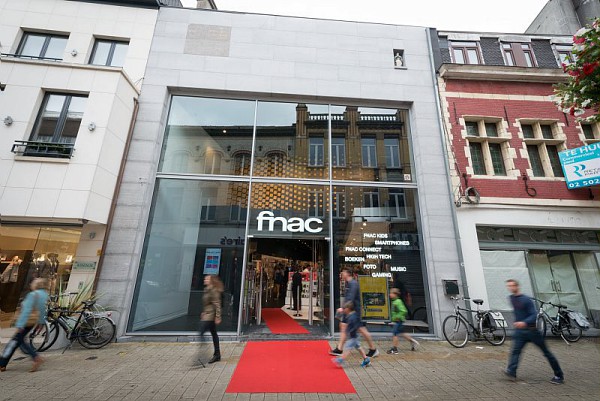
Fnac Darty has aligned itself with the most ambitious Paris Agreement target (+1.5°C by 2100) to reduce its direct (Scope 1 and Scope 2) and indirect (Scope 3) emissions. Objectives were defined and validated by the Science Based Targets initiative in 2022:
- reduce Scope 1 and 2 emissions by 50% by 2030 vs. 2019;
- reduce emissions related to product use by 22% per product sold (1) by 2030 vs. 2019.
Suppliers representing 80% of CO2 emissions from product manufacturing will have set science-aligned targets by 2026.
In order to steer these objectives and monitor the associated action plans, Fnac Darty has set up a Climate and Biodiversity Committee, sponsored at the highest level by three members of the Executive Committee: the Group General Counsel, the Chief Services & Operations Director, and the Chief Commercial & Marketing Officer.
Reducing the energy impact of the sites
In light of energy challenges, Fnac Darty strengthened its action in 2022 and rolled out an energy efficiency plan to drastically reduce its energy consumption. This plan includes significant investments to roll out LED lighting and consumption control equipment across all of its stores, as well as new temperature setpoints.
The ambitious commitment to reduce electricity consumption by at least 15% between 2022 and 2024 has been exceeded. This performance was achieved notably through the implementation of LED lighting in 85% of the stores and the widespread installation of Building Energy Management Systems (BEMS) to control our energy-consuming equipment. This ambition is an integral part of the 50% CO2 emission reduction target (Scopes 1 et 2) by 2030.
The new energy policy (2024-2026) sets a target of a 3% reduction in electricity consumption. This will enable the Group to consolidate the achievements of the previous policy and aim for the -40% consumption target imposed by the tertiary sector decree by 2030.
Committing to the development of renewable energy in France
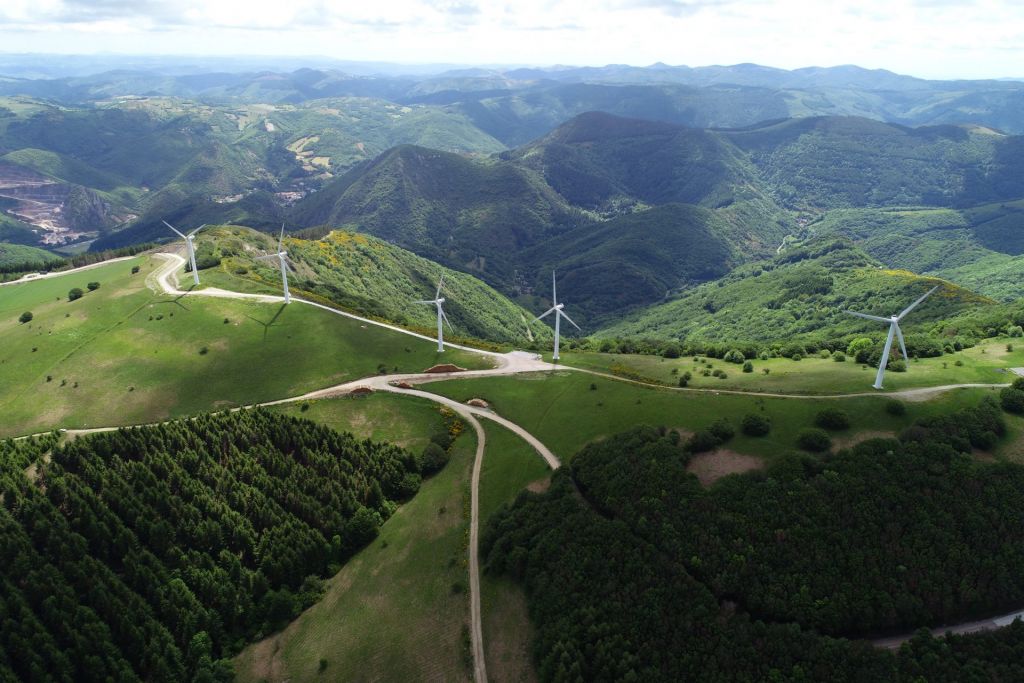
Fnac Darty has chosen to use traceable guarantee of origin certificates, particularly through direct Power Purchase Agreements with renewable energy producers. The Group has signed a Corporate Power Purchase Agreement for the production of a solar park in the Centre-Val de Loire region. The production of this plant began on April 1, 2023, and it is dedicated to the Group.
This long-term contract will not only enable Fnac Darty to green up its energy mix, but will also make the French energy mix greener.
At the end of 2025, 67% of the electricity consumed by the Group came from renewable sources.
Limiting the impact of our goods transport
Every day, thousands of products pass between the Group’s warehouses, its 1500 stores and its millions of customers. To limit the impact of this road transport on air quality and global warming, the Group is focusing its efforts on several levers:
- Optimizing transport plans and the network of warehouses to limit the distances traveled by products;
- Optimizing truck loading;
- Giving preference to lower-emission vehicles (BioNGV, biofuels, electric).
As part of the regular renewal of its fleet, after-sales service management has given preference to vehicles emitting less greenhouse gases and other pollutants. In France, the fleet consists of 220 electric vehicles and 600 bioethanol-powered vehicles, accounting for 66% of the total service fleet.
In 2021, the Transport Management France committed to the FRET 21 initiative, led by Ademe and the Association and Union of French Transport, with the goal of reducing CO2 emissions by 10% between 2020 and 2023. This objective was largely achieved and validated at the beginning of 2024, with a 20% reduction in CO2 emissions within the scope of the commitment. In 2025, 53% of the carrier fleet was low-carbon.
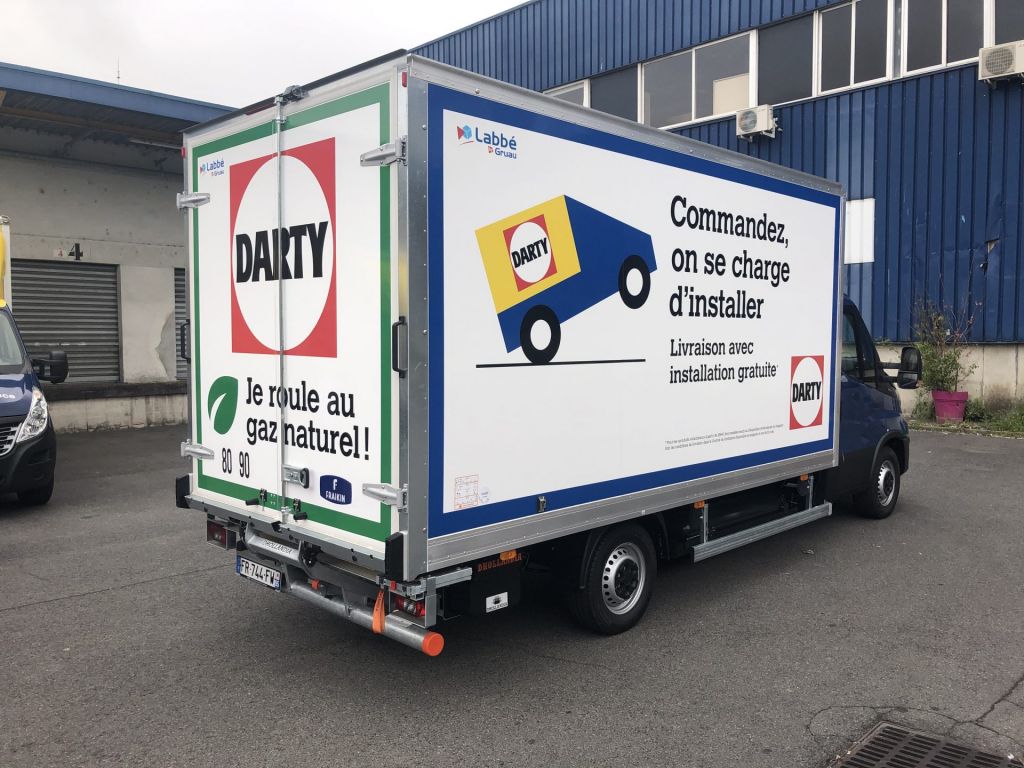
As a signatory of the Charter of Commitments for the reduction of the environmental impact of online commerce, Fnac Darty is committed to reducing the environmental impact of its shipping by working on optimizing flows and reducing packaging, but also by raising the awareness of its customers so that they are informed about the impact of their delivery.
Limiting the impact from our indirect emissions
As part of a continuous improvement approach, the Group is working to improve the way it measures indirect emissions (Scope 3). For Fnac Darty, this concerns: products sold, commuting between home and work, customer travel, as well as digital technology. Regarding this last emission item, a Green IT approach has been launched by the IT department.
The Group measures the impact of the new products it sells. This analysis takes into account the entire product lifecycle, from manufacturing to transport, through product use and end of life. Furthermore, 73% of merchandise suppliers have a science-based decarbonization strategy (SBTi target).
In order to highlight the positive impact of the Group’s actions to extend product life span, Fnac Darty also studies the “emissions avoided” by its repair activities and the sale of second-hand products.
*Carbon dioxide is the main greenhouse gas (GHG), but not the only one. To simplify the measurement of GHG emissions, the other gases are expressed by applying a conversion factor (the global warming potential). The resulting unit is expressed as “CO2 equivalent”.
**The Science Based Targets initiative (SBTi) aims to encourage companies to adopt carbon strategies aligned with scientific knowledge, i.e. aiming for the same decarbonization level as set out in the Paris Agreement
Energy efficiency
In line with its energy efficiency plan rolled out at the end of 2022, the Group is now going further and seeing the first results of its energy policy.
After several months spent optimizing equipment, training staff and raising awareness among teams, Fnac Darty has been awarded the ISO 50001 certification.
The Group made strategic investments and mobilized its employees in order to cut back on its energy consumption and thus reduce its environmental impact. A number of measures have been implemented:
- Investment in LED lighting and energy management tools (BMS): All Fnac and Darty integrated stores have been fitted with energy-efficient LED solutions. In tandem with this, the installation of Building Management Systems (BMS) has allowed for more granular control and better regulation of the Group’s energy consumption.
- New temperature and lighting guidelines: Temperature regulation and lighting use have been standardized and cataloged in the green habits guide.
- Team awareness and involvement: A network of in-store energy CSR ambassadors has been created, a dedicated e-learning introduced, and regular communications set up to encourage eco-friendly behaviors and get teams more involved in energy efficiency efforts.
- Continuous monitoring of energy performance: A dedicated team has been created at the Fnac Darty head office to continuously monitor and analyze energy performance, allowing improvement opportunities to be quickly identified.
All these measures have enabled the Group to:
- reduce its electricity consumption by at least 15% compared to 2022.*
- reduce energy and transport-related CO2 emissions by 50% by 2030.
This certification comes after a series of rigorous audits of the measures put in place and the continuous improvement policy.
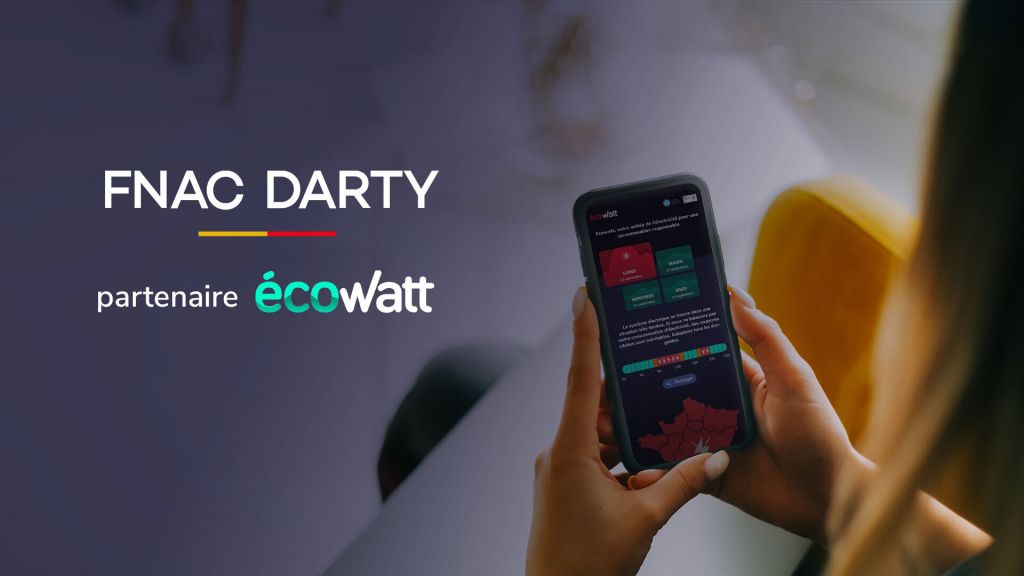
As an EcoWatt partner, Fnac Darty supports the platform’s manifesto promoting structural efficiency, and is continuing its work to raise awareness among its stakeholders and implement actions to improve electricity consumption management for the coming winter.
*Fnac and Darty France integrated stores fall within the ISO 50001 certification scope
*In France